The Robert Wood Johnson Foundation Commission to Build a Healthier America believes that there is more to good health than health care.  The Commission issued 10 recommendations that identify how to enable Americans, particularly those who face the greatest barriers to good health, to lead healthy lives.  The recommendations are rooted in a twin philosophy:  Building a healthier America requires individuals to make healthy choices for themselves and their families and a societal commitment to remove the obstacles preventing too many Americans from making healthy choices.

The Commission's recommendations - which focus on how and where people live, learn, work and play - are a call for each of us to take responsibility for our health and for leadership across sectors to promote greater opportunities for every one of us to live healthy and productive lives.

Read the recommendations.

Perspectives

LEADERSHIP BLOGS

Guest Post: F as in Fat

Jim Marks, Robert Wood Johnson Foundation
July 2, 2009

Yesterday I was involved in the RWJF and the Trust for America’s Health release of our annual F as in Fat report on obesity in the United States. This year’s findings were particularly interesting. Read More

Guest Post: Asking the Right Questions About Prevention

Robert J. Gould and Corinne G. Husten, Partnership for Prevention
July 1, 2009

When the answer is that living longer is a problem, you know you’re asking the wrong question. The Congressional Budget Office recently issued a memo identifying areas where Congress could save money in a health reform bill. When it came to disease prevention and health promotion, the logic in its response was troubling. Read More

More Blogs

Stories

Laquanda Dobson and Shabazz Ransom

Healthy habits start young. That’s why Laquanda Dobson and Shabazz Ransom of West Philadelphia spend much of their free time teaching elementary schoolers how to grow, buy and cook nutritious foods. Meet Laquanda Dobson and Shabazz Ransom

More Stories

News And Events

  • D.C. Region Health Check Up: Wide Differences Based on Location

    June 30, 2009

    A new report detailing the health of residents in the Washington region shows where you live in the area could add or subtract nearly 10 years from your life. The Washington Council of Governments released a joint report detailing the connection between where someone lives in the region and the quality of their health. Read More

  • Washington Post: Ky. Schools' Healthy Example Could Shape a National Policy

    June 29, 2009

    As Congress moves to reauthorize childhood nutrition programs this summer, it is again taking up the issue of whether sugary sodas, chips and candy should be allowed in schools. Legislators have tried to limit junk food in schools since 1994. But each time the measures were blocked by powerful food lobbies, and conventional wisdom has long held that such snacks are a necessary evil because they provide key revenue to supplement the federal school-lunch program and help pay for sports and arts programs. Read More

  • USDA Report to Congress: Access to Affordable and Nutritious Food—Measuring and Understanding Food Deserts and Their Consequences

    June 25, 2009

    The report summarizes findings of a national-level assessment of the extent and characteristics of food deserts, analysis of the consequences of food deserts, lessons learned from related Federal programs, and a discussion of policy options for alleviating the effects of food deserts. Overall, findings show that a small percentage of consumers are constrained in their ability to access affordable nutritious food because they live far from a supermarket or large grocery store and do not have easy access to transportation. Read More

  • Sen. Harkin Op-Ed: Shifting America from sick care to genuine wellness

    June 25, 2009

    With the Senate health committee convening daily to craft a comprehensive health reform bill, the basic outline of this landmark legislation is now clear. Yes, it will ensure access to affordable, quality care for every American. But, just as important, it will hold down health care costs by creating a sharp new emphasis on disease prevention and public health. Read More

More News and Events

State data

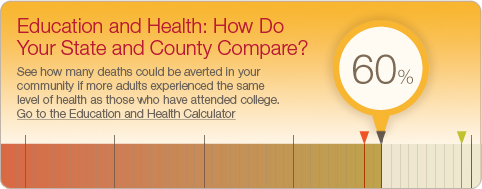
See how factors such as income and education relate to child and adult health (by state).

Resources

  • Reaching America's Health Potential Among Adults: A State-by-State Look at Adult Health

    Reaching America’s Health Potential Among Adults: A State-by-State Look at Adult Health – the second Commission chartbook investigating health across social and economic groups – examines the differences in adults’ health based on their levels of education. Nationally and in each state there is a consistent and striking pattern: as levels of education rise, health improves.

    See the report

  • Beyond Health Care: New Directions to a Healthier America

    This Commission report, Beyond Health Care: New Directions to a Healthier America, describes the Commission's work and provides recommendations for moving forward to ensure all Americans have an opportunity to lead healthier lives.

    See the report

  • Across America, Differences in How Long and How Well We Live

    Where we live, work, learn and play dramatically affects our health—for better or for worse. Across America and within every state, there are differences in how long and how well we live. This map and accompanying chart show the highest and lowest life expectancy rates (based on county-level data) found in each state and the District of Columbia.

More Resources